Your other half
More than half the cells in your body are not yours
They are bacteria, and most of them live in your gut. They digest for you, talk to your defences and stay with you for life. Here is what you need to know, simply explained
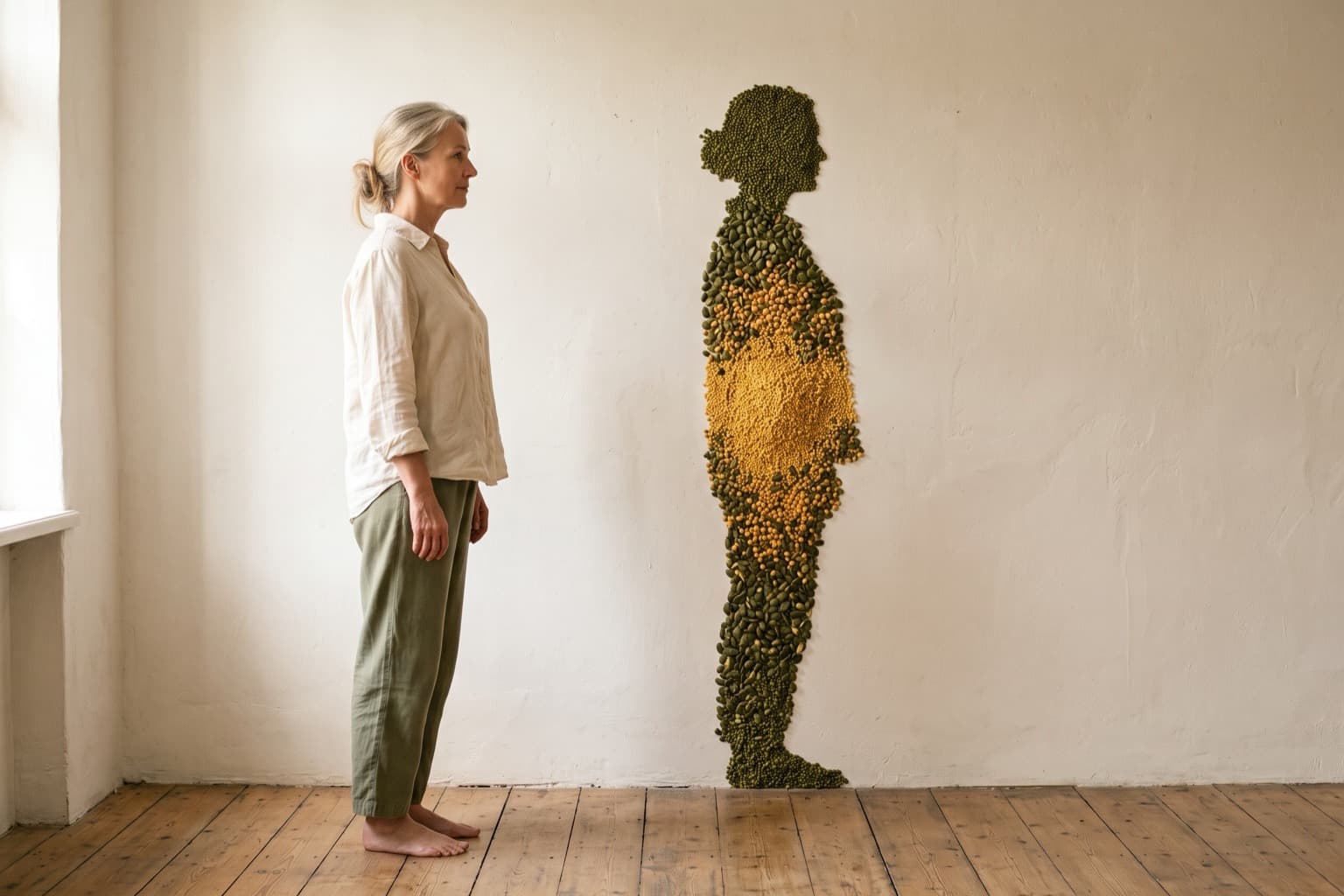
- 38 trillion
- bacteria live in an adult 1
- 30 trillion
- human cells alongside them 1
- 200 grams
- their weight, about that of your heart 1

01 · One number, finally counted
For forty years everyone repeated “ten to one”. Nobody had counted
You have probably read that your body holds ten bacteria for every human cell. The figure came from an estimate in the 1970s, repeated in books and lectures until it passed for a fact.
In 2016, three researchers redid the arithmetic with real data. The ratio is close to one to one: about 38 trillion bacteria to 30 trillion human cells 1. By cell count, you are half human. The other half works for you.
This page is written in that spirit: counted facts, sources you can open, and plain words.

02 · A living ecosystem
Your gut is more like a forest than a battlefield
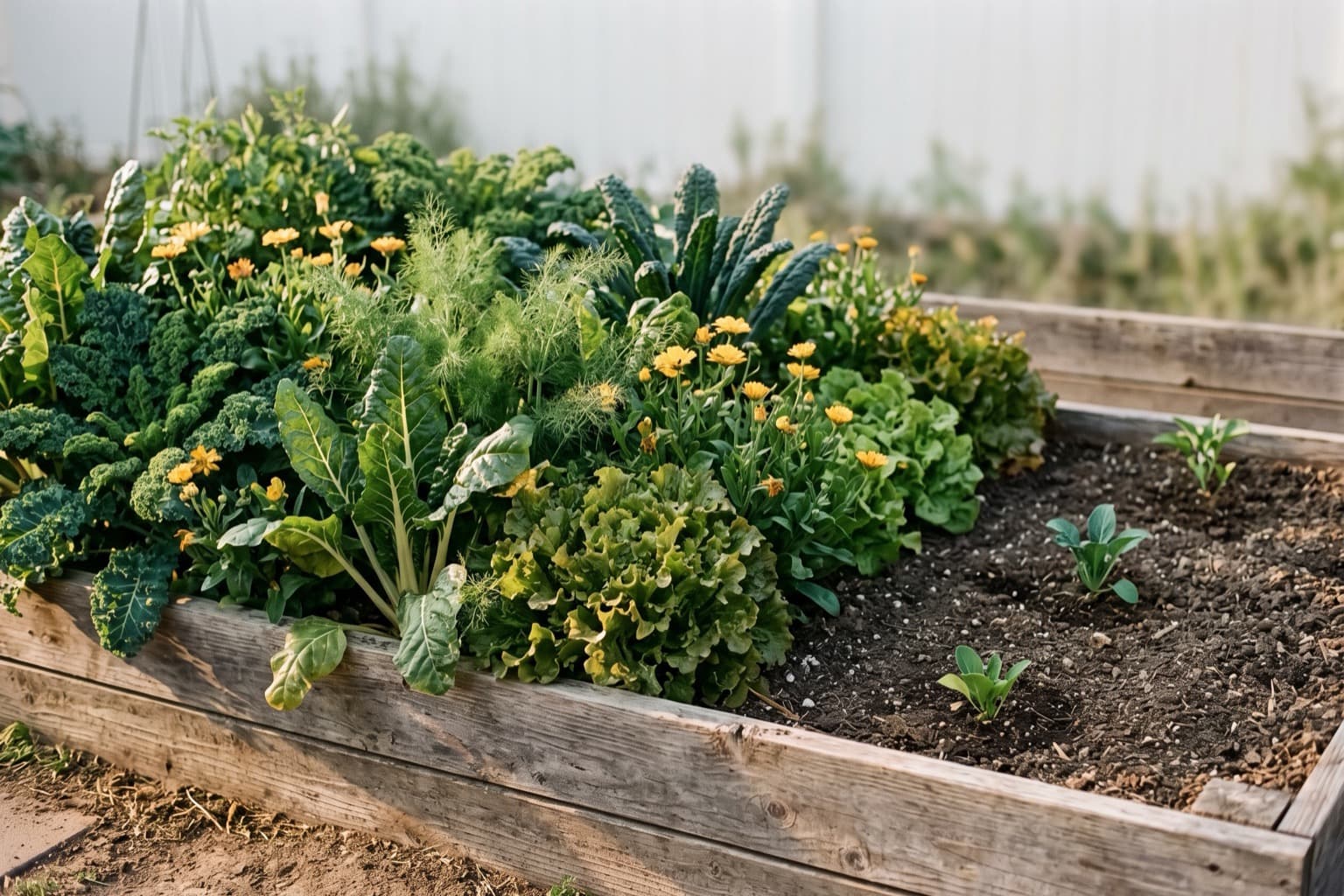
We were taught to see bacteria as enemies. Most of those living in you are residents: they form a dense, organised community, like a forest, where every species has its place and its job.
When researchers sequenced the microbiome of hundreds of healthy people, they found that two people in great shape can host very different bacteria doing the same jobs 2.
So there is no “normal” microbiome to copy. There is yours, and its health shows in its diversity and balance, the way a forest shows in the variety of what grows there.
03 · What they do for you
Your bacteria turn what you cannot digest into fuel
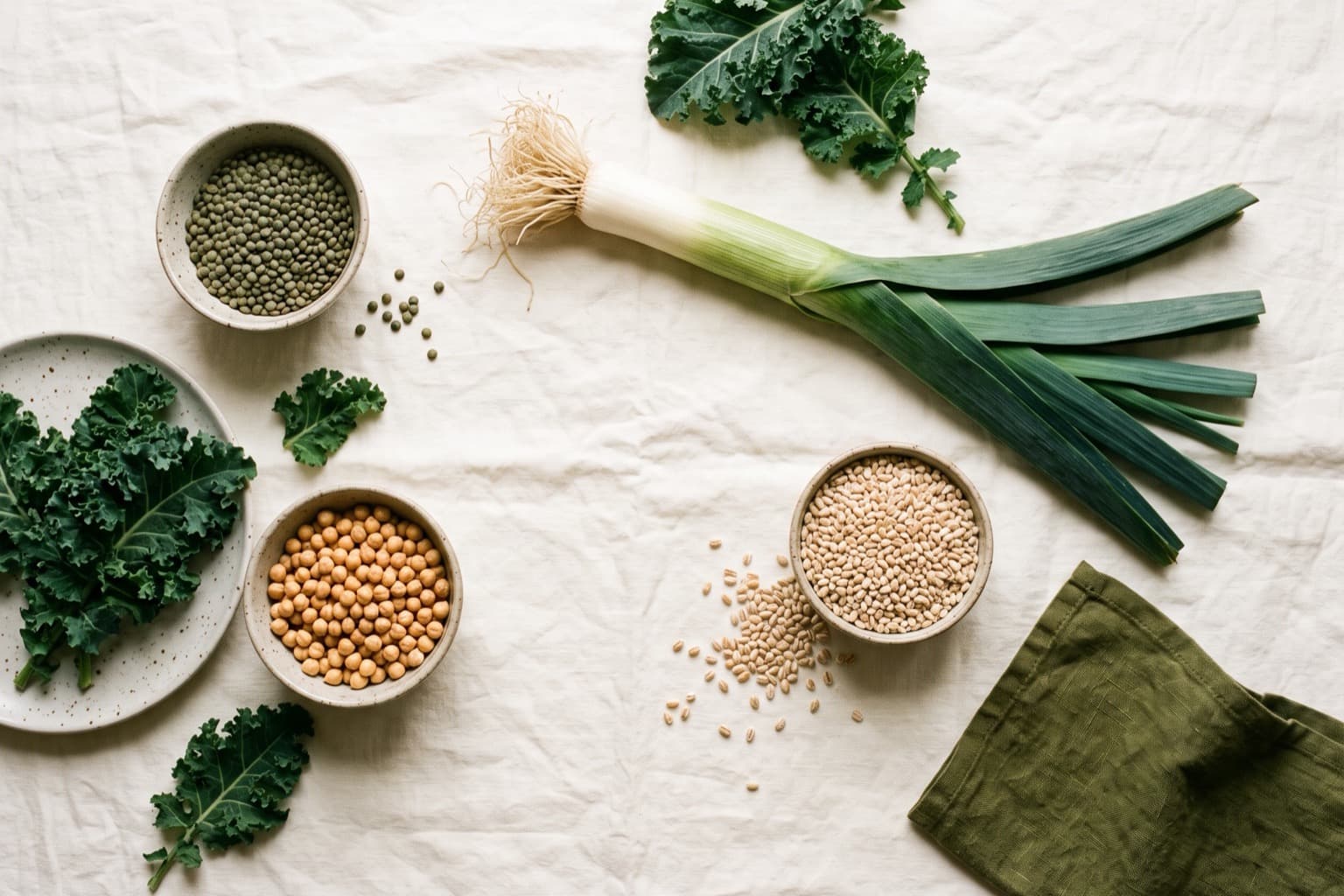
Your own enzymes can do nothing with the fibre in lentils, whole grains, leeks or leafy greens. Your bacteria can. They ferment it and make short-chain fatty acids, including butyrate, the favourite fuel of the cells lining your colon 3.
So fibre is not just a broom. It is food for your bacteria, which feed you in return.
These same bacteria train your defences: the gut is where your immune system learns to tell friend from foe 3.
04 · Unique, like a fingerprint
Your microbiome depends on your life, far more than on your genes
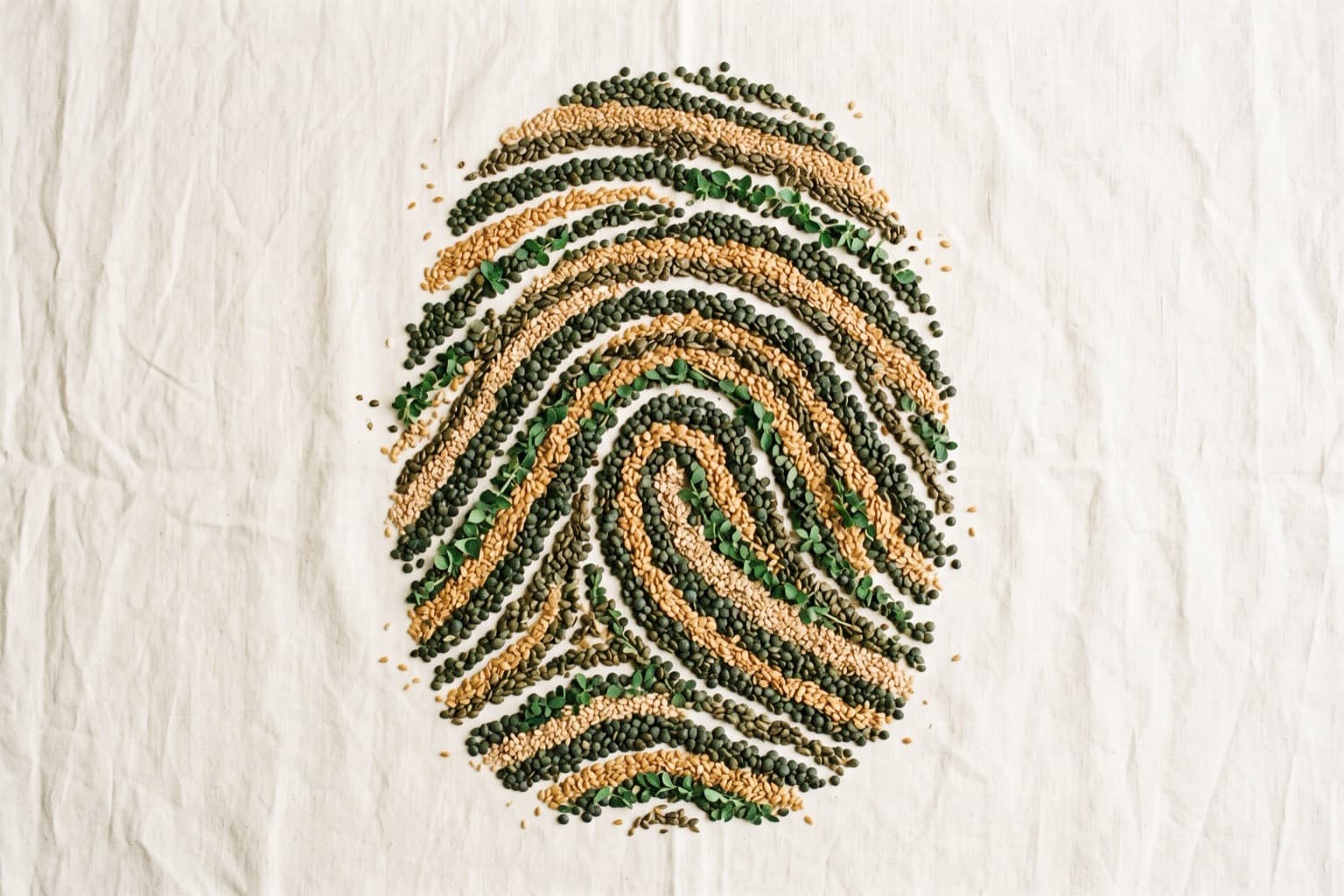
The microbiome differs from one country to another and from one age to another, from early childhood 4. And genes play a small part: in over a thousand people of different origins, heredity explained almost nothing. Unrelated housemates resembled each other more than relatives living apart. What mattered: diet, medication and lifestyle 5.
That is good news: what shapes your microbiome is largely what you do. And it means a programme designed for “everyone” is addressed to no one in particular.
05 · Faithful, and responsive
It stays with you for years, and responds within days
Left in peace, your microbiome is remarkably faithful: most of your bacteria stay with you for years, and you share strains with your family 6.
But it responds fast. In volunteers switched to an entirely plant-based or entirely animal-based diet, the community changed within days 7.
It also responds to antibiotics: within three or four days diversity collapses, and the return to the starting point is often incomplete 8. A necessary antibiotic is taken without hesitation. An unnecessary one has an invisible cost.
06 · When the balance is lost
A depleted microbiome is linked to many modern diseases
Researchers call dysbiosis the shift from a rich, stable community to a depleted one. It is associated with a long list of diseases of modern life: metabolic disorders, inflammatory and allergic diseases, some cancers, some mood and behavioural disorders 9 10 11. Chronic fatigue has also been linked to a microbiome that produces less butyrate 12.
In 2022, Douglas Hanahan, author of the reference “hallmarks of cancer” framework, added microbiome polymorphism to the characteristics that make cancer possible, alongside inflammation 13. In mice, transferring a microbiome transfers part of what it does to the body 14.
Linked does not mean guilty: in humans, research is still establishing what causes what. What this work already says is that the diversity of your microbiome is worth looking after, and that you have the means to do it.
07 · What feeds it
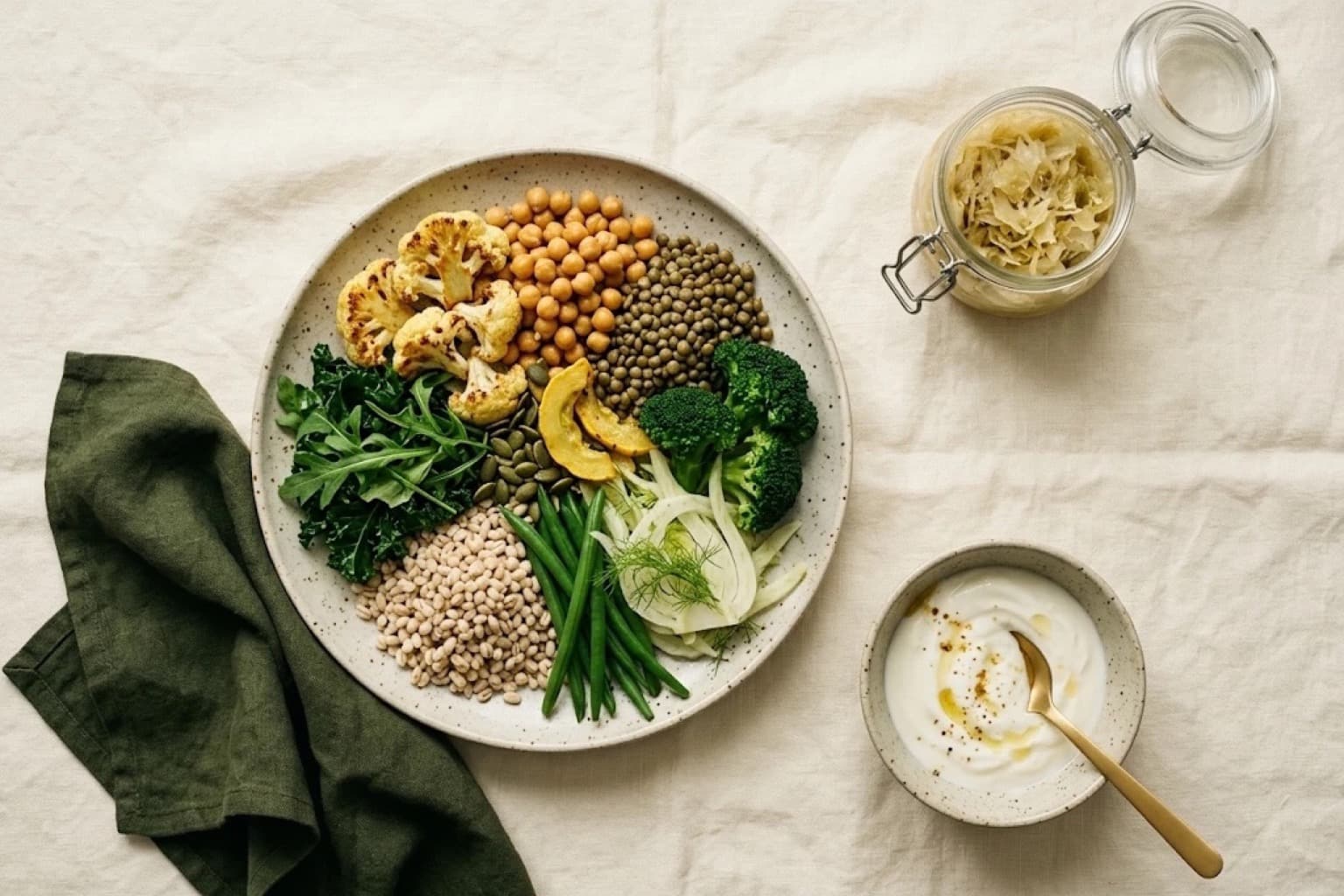
The best-proven habit fits in a sentence: varied plants, every day
Eat a wide variety of minimally processed plants, and add some fermented foods: that is what has the most evidence behind it. Simple, cheap, and it holds.
The fibres your bacteria prefer are the ones your digestion lets through. Deprived of them, mice carrying a human microbiome lose diversity, and part of it is lost for good across generations 15. In humans, inulin-type fibres at three to twenty grams a day measurably raise bifidobacteria, according to fifty trials in over two thousand five hundred people 16.
Sleep, stress and physical activity matter too. Your starting questionnaire takes them into account.
08 · Even the response is personal
Two people taking the same thing do not get the same thing
In eight hundred people whose blood sugar was monitored continuously, the same meal did not produce the same response from one person to the next, and the microbiome helped predict it 17.
Even a probiotic does not settle the same way in everyone: in healthy volunteers, its colonisation depended on the person and their starting microbiome 18.
That is why Rhealiz does not hand you a formula once and for all. Your answers are re-read every quarter, and your programme follows.
What is established, what is emerging, what is being studied
We rank every statement on this page by its level of evidence. It is our way of respecting you.
Established
Measured in humans, replicated, accepted by the scientific community
Emerging
Solid human results, still recent
What Rhealiz does with this
We start from you, not from a stool test: a snapshot of your microbiome on a given morning changes with the next meal. Your 90-second questionnaire locates your starting point.
Your formula is a probiotic and prebiotic food supplement, made in France, which contributes to the balance of the intestinal flora. Its strain, its dose and its studies are in your box and in your member space.
Because your microbiome changes and your response is personal, we re-read your answers every quarter and adjust your programme. We will not promise you anything. We will show you everything.
No commitment · you see the price before deciding
Frequently asked questions
- Am I really “half bacterial”?
- By cell count, yes: about 38 trillion bacteria to 30 trillion human cells, according to the 2016 reference calculation. By weight you remain human: those bacteria weigh about 200 grams.
- Is there a normal microbiome?
- Not a species list to copy. Healthy people have very different microbiomes doing the same jobs. What matters is the diversity and balance of yours.
- Would a stool test tell me what to take?
- It describes your stool on a given day, and the microbiome changes within days. Rhealiz sells no test and asks for none: your questionnaire and your quarterly follow-up do the work.
- How quickly does diet change the microbiome?
- Within days for composition. What lasts is what you keep up: the variety and quantity of minimally processed plants.
- Do antibiotics harm the microbiome?
- They disrupt it strongly within days and the return is sometimes incomplete. A necessary antibiotic is taken. If you are on treatment, talk to your doctor.
Sources
Every figure on this page points to a scientific publication. Links were verified on 19 October 2026.
- 1.Sender R, Fuchs S, Milo R. Revised estimates for the number of human and bacteria cells in the body. PLoS Biology, 2016. doi:10.1371/journal.pbio.1002533
- 2.Human Microbiome Project Consortium. Structure, function and diversity of the healthy human microbiome. Nature, 2012. doi:10.1038/nature11234
- 3.Gilbert JA, Blaser MJ, Caporaso JG, et al.. Current understanding of the human microbiome. Nature Medicine, 2018. doi:10.1038/nm.4517
- 4.Yatsunenko T, Rey FE, Manary MJ, et al.. Human gut microbiome viewed across age and geography. Nature, 2012. doi:10.1038/nature11053
- 5.Rothschild D, Weissbrod O, Barkan E, et al.. Environment dominates over host genetics in shaping human gut microbiota. Nature, 2018. doi:10.1038/nature25973
- 6.Faith JJ, Guruge JL, Charbonneau M, et al.. The long-term stability of the human gut microbiota. Science, 2013. doi:10.1126/science.1237439
- 7.David LA, Maurice CF, Carmody RN, et al.. Diet rapidly and reproducibly alters the human gut microbiome. Nature, 2014. doi:10.1038/nature12820
- 8.Dethlefsen L, Relman DA. Incomplete recovery and individualized responses of the human distal gut microbiota to repeated antibiotic perturbation. PNAS, 2011. doi:10.1073/pnas.1000087107
- 9.Álvarez J, Fernández Real JM, Guarner F, et al.. Gut microbes and health. Gastroenterología y Hepatología, 2021. doi:10.1016/j.gastrohep.2021.01.009
- 10.Fan Y, Pedersen O. Gut microbiota in human metabolic health and disease. Nature Reviews Microbiology, 2020. doi:10.1038/s41579-020-0433-9
- 11.Cryan JF, O'Riordan KJ, Cowan CSM, et al.. The microbiota-gut-brain axis. Physiological Reviews, 2019. doi:10.1152/physrev.00018.2018
- 12.Guo C, Che X, Briese T, et al.. Deficient butyrate-producing capacity in the gut microbiome is associated with bacterial network disturbances and fatigue symptoms in ME/CFS. Cell Host & Microbe, 2023. doi:10.1016/j.chom.2023.01.004
- 13.Hanahan D. Hallmarks of cancer: new dimensions. Cancer Discovery, 2022. doi:10.1158/2159-8290.CD-21-1059
- 14.Turnbaugh PJ, Ley RE, Mahowald MA, et al.. An obesity-associated gut microbiome with increased capacity for energy harvest. Nature, 2006. doi:10.1038/nature05414
- 15.Sonnenburg ED, Smits SA, Tikhonov M, et al.. Diet-induced extinctions in the gut microbiota compound over generations. Nature, 2016. doi:10.1038/nature16504
- 16.Nagy DU, Sándor-Bajusz KA, Bódy B, et al.. Effect of chicory-derived inulin-type fructans on abundance of Bifidobacterium and on bowel function: a systematic review with meta-analyses. Critical Reviews in Food Science and Nutrition, 2022. doi:10.1080/10408398.2022.2098246
- 17.Zeevi D, Korem T, Zmora N, et al.. Personalized nutrition by prediction of glycemic responses. Cell, 2015. doi:10.1016/j.cell.2015.11.001
- 18.Zmora N, Zilberman-Schapira G, Suez J, et al.. Personalized gut mucosal colonization resistance to empiric probiotics is associated with unique host and microbiome features. Cell, 2018. doi:10.1016/j.cell.2018.08.041
Rhealiz makes no health claim (Regulation EC 1924/2006). This page describes scientific publications and is not medical advice. If you are on treatment, talk to your doctor before starting a food supplement.
Last updated : 2026-10-19